Lovely Lilac!
Lilac (Syringa vulgaris), a perennial member of the Oleaceae or Olive Family, is an exquisite, early springtime flowering tree planted liberally in the Northeast and a favorite amongst garden and botanical enthusiasts.
Originating in the Balkan Peninsula, Lilac is naturalized throughout Europe, North America, and parts of Asia. In addition to that, many hybridized specimens can be found in garden centers primarily in the northeastern half of the United States. Lilacs thrive in areas with cold winters and so it is frequently found in northern latitudes in New England, the Great Lakes Regions, and the Midwest. If you’re living in the southern part of the country, don’t despair! I’ve discovered that there are certain cultivars that are more heat tolerant such as ‘Josee’, ‘Lavender Girl’, and ‘Blue Skies’ that are suitable for zones 8-10 and will grow in states as hot as Florida.
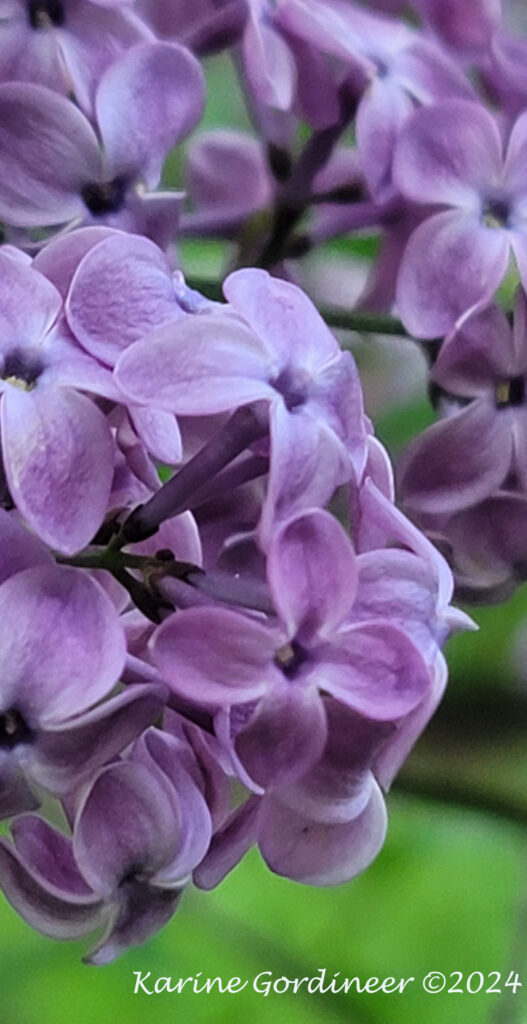
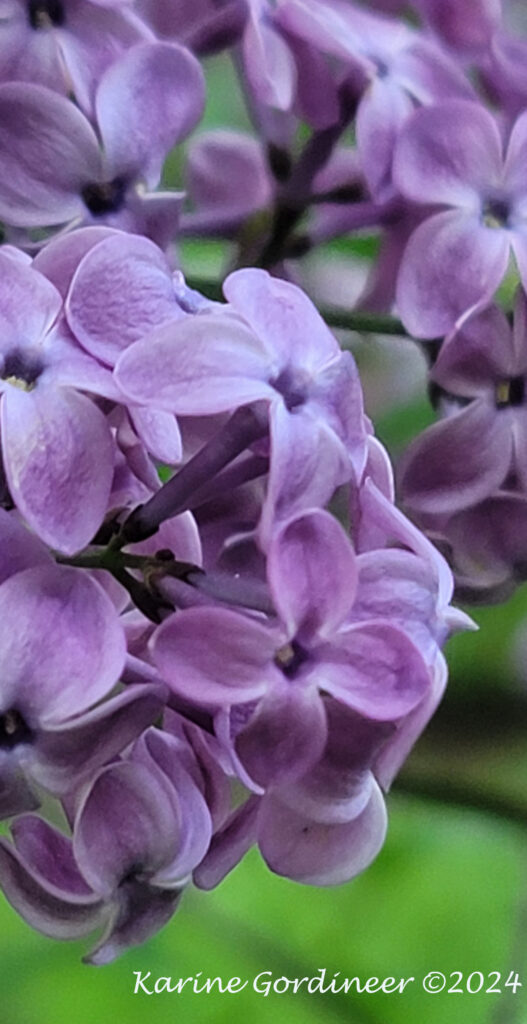
Lilac’s drooping flower clusters exudes a hypnotic scent that seems to carry far on the air currents awakening the senses after our long, drab winters, a literal breath of fresh air. Lilac blossoms are conical in shape with individual florets bearing a deep, nectar-filled tube ending in four fused petals. The scented clusters range in colors from lavender, light lavender, deep purple, fuchsia, blue, mauve, and white. Lilac is a long-lived tree with some individuals living upwards of 100 years. Lilac trees are often found near the remains of old homesteads outlasting their early occupants and even the homes themselves.
Lilac is one of my favorite springtime florals. I look forward to seeing these amazing blooms and smelling their mesmerizing scent every end of April into May. Growing up I had a favorite Lilac tree, two in fact! One at my house and one at my grandmother’s. Whenever I smell Lilac, it always reminds me of my grandmother Helen who had an amazing green thumb. The Plants she tended seemed to grow right towards her. There wasn’t anything she couldn’t grow!
In addition to its loveliness, you may be surprised to learn Lilac has edible and medicinal properties! Read on to learn more about the Lovely Lilac!
The Lilac scent is often used in personal care products such as soaps and perfumes and is a favorite amongst candle makers. The flowers make a stunning display when added to salads and baked goods. When infused in water, Lilac flowers lend a subtlety sweet, floral flavor and scent. My personal favorite is Lilac Honey that I have made in my Herbal Honeys Workshop that I occasionally add to my teas. Lilac Honey when made correctly, exudes a delicate fragrance and palate that is both unique and captivating. You could try your hand at Lilac Sugar and Lilac Syrup as well.
As an antiperiodic and antiparasitic, Lilac has been used historically in the treatment of such illnesses as malaria and periodic type of infections. As a diaphoretic and immune tonic, Lilac flowers have a long history of use to reduce fevers, easing coughs, and in the treatment of colds most especially recurrent colds. Its antiparasitic properties can aid in clearing the body of parasites, and it is considered a blood cleanser. Lilac bears anti-inflammatory properties that are used both internally and topically. Topically, Lilac’s astringent properties are tightening to the facial pores and complimentary to the complexion. Lilac has been used to heal other skin conditions such as cuts and scrapes. The bark is used as a soak for sprains. Lilac is said to have an effect on the spinal column even exhibiting healing properties to spinal trauma.

From a spiritual perspective, Lilac corresponds to the crown chakra and aids in balancing the chakras, a very important aspect of our energetic anatomy. Lilac helps us to move away from worry and negative thoughts, filling us with a sense of positivity and renewal. Folklore on Lilac tells us that when planted in the garden, Lilac attracts the Nature Spirits and the Fae to the garden. It was customary to plant Lilac to ward off evil and protect the home. In my Plant Spirit Healing work, Lilac is a threshold Plant enabling us to connect with the Fae Realm especially at this time of year. She aligns us with the Divine Blueprint for our lives. Working with the Lilac Plant Spirit or flower essence will aid us in focusing on our goals and dreams, imbuing them with positivity and joy.
If you’d like to experience more of the Lilac Plant Spirit, check out upcoming classes or schedule a Plant Spirit Healing Session utilizing the contact form.